|
Solitude elevates the mind
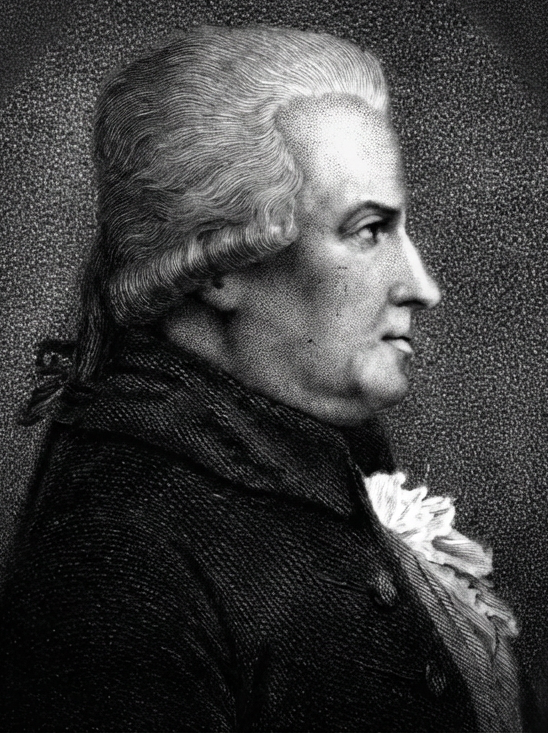 Johann Georg Ritter von Zimmermann (1728-1795) was a Swiss philosopher and medical doctor. He was born to a noble family, studied at the University of Bern, and received his medical degree from the University of Göttingen in Germany. As a young man he published several books that became popular and widely read throughout Europe. He soon became the doctor of kings and nobles such as George III and Frederick the Great. Later in his life, however, he was engaged in religious and personal disputes, and had a number of enemies. He died at the age of 67 after months of mental and physical deterioration. Johann Georg Ritter von Zimmermann (1728-1795) was a Swiss philosopher and medical doctor. He was born to a noble family, studied at the University of Bern, and received his medical degree from the University of Göttingen in Germany. As a young man he published several books that became popular and widely read throughout Europe. He soon became the doctor of kings and nobles such as George III and Frederick the Great. Later in his life, however, he was engaged in religious and personal disputes, and had a number of enemies. He died at the age of 67 after months of mental and physical deterioration.
Zimmermann’s book SOLITUDE was written after he married his second wife (the first died earlier), who was 30 years younger than him. Its four volumes were published between 1784-1786. Each chapter in the book discusses solitude from a different perspective: Its positive influence on the mind, on the heart, in retirement, in exile, at old age, and so on. The following text is slightly adapted from Chapter 2 of Volume 1, which deals with the influence of solitude on the mind.
The love of solitude, when cultivated in the morning of life, elevates the mind to a noble independence. However, to acquire the advantages of solitude, the mind must not be driven to it by melancholy and dissatisfaction, but rather motivated by a real dislike of the idle pleasures of the world, a rational contempt for the deceitful enjoyments of life, and an objective worry not to be corrupted and seduced by the world’s clever and destructive delights.
[…]
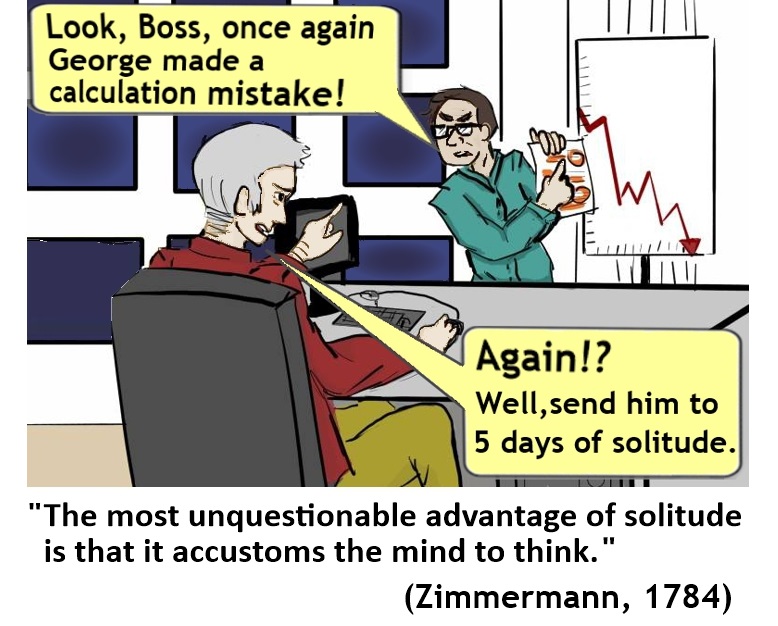
The advantages of solitude, to a mind that feels a real disgust for the dull activities of society, are great. When we are freed from the world, the veil which obscured the intellect suddenly falls, the clouds which dimmed the light of reason disappear, the painful burden which oppressed the soul is alleviated. We no longer struggle with surrounding dangers, the fear of danger vanishes, the sense of misfortune becomes softened. What happens to us no longer produces the murmur of dissatisfaction, and we enjoy the delightful pleasures of a calm, tranquil, and happy mind. Patience and resignation follow, and they reside in a happy heart. Every destructive worry flies away on the wings of joy, and everywhere we see pleasant and interesting scenes: the brilliant sun sinking behind the lofty mountains and coloring their snowy peaks with golden rays; the choir of birds seeking a secure place to rest; the sound of the amorous rooster; the solemn and dignified march of bulls returning from their daily work; and the graceful steps of the generous horse. When we are in the midst of the vicious pleasures of a great metropolis – where wisdom and truth are constantly despised, and integrity and conscience are thrown aside as inconvenient and oppressive – the best ideals are obscured, and the purest virtues of the heart are corrupted. But the most unquestionable advantage of solitude is that it accustoms the mind to think. The imagination becomes more vivid, and the memory more faithful, while the senses remain undisturbed, and no external object agitates the soul. When we are far from the tiresome tumults of public society, where all kinds of objects dance before our eyes and fill the mind with incoherent ideas, we learn to focus our attention on a single subject, and to contemplate it alone.
 […] […]
Profound meditation in solitude and silence often elevates the mind above its natural zone. It fires the imagination and produces the most refine and sublime ideas. The soul then tastes the purest and most refined delight, and it almost loses the idea of existence in the intellectual pleasure it receives. The mind on every emotion flies through space into eternity. It is raised, in this free enjoyment of its powers by its own enthusiasm, and strengthens itself in the practice of contemplating the noblest topics, and of adopting the most heroic pursuits.
[…]
Solitude refines the taste, by giving the mind greater opportunities to select the beauties of those objects which attract its attention. There it depends only on us to choose those activities which afford the highest pleasure, and to read those writings and reflections which purify the mind, and remember them with the richest variety of images. In solitude we easily avoid the false ideas which we acquire so easily in the social world, where we rely on the preferences of others instead of consulting our own. It is intolerable to be forced continually to say, “I don’t dare to think otherwise.” Why, alas, shouldn’t people strive to form their own opinions, instead of letting themselves be guided by the arbitrary dictates of others? If a work please me, why should it matter to me whether high society approves of it or not? What information do I receive from you, you cold and miserable critics? Does your approval make me feel what is truly noble, great, and good, with higher joy, or more refined delight? How can I submit to the judgment of people who always examine hastily, and generally judge wrongly?
|
