|
ALBERT CAMUS
|
|
Revolt against the absurd death
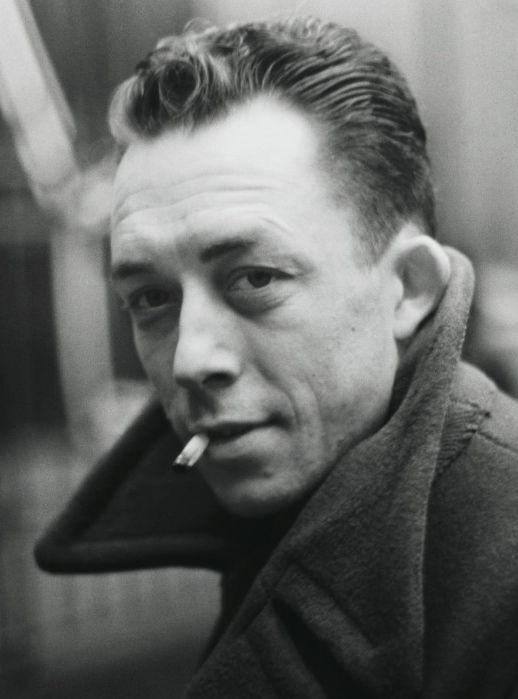 Albert Camus (1913-1960) was an important French existentialist philosopher and novelist. He was born in French Algeria to poor parents and studied philosophy at the University of Algiers. He then moved to France, where he worked as a journalist in several newspapers. At different periods of his life he was associated with communist, anarchist, democratic, and human rights circles. He married twice, although he also had many extra-marital affairs. During World War II he joined the French resistance movement against Nazi occupation, but continued writing. In 1941 he published his first two books, The Stranger and The Myth of Sisyphus. In 1957 he received the Nobel Prize for literature. He died in a car accident at the age of 46. Albert Camus (1913-1960) was an important French existentialist philosopher and novelist. He was born in French Algeria to poor parents and studied philosophy at the University of Algiers. He then moved to France, where he worked as a journalist in several newspapers. At different periods of his life he was associated with communist, anarchist, democratic, and human rights circles. He married twice, although he also had many extra-marital affairs. During World War II he joined the French resistance movement against Nazi occupation, but continued writing. In 1941 he published his first two books, The Stranger and The Myth of Sisyphus. In 1957 he received the Nobel Prize for literature. He died in a car accident at the age of 46.
The following text is adapted from Camus’ book Myth of Sisyphus (1941). Camus starts his discussion from simple, insignificant moments. In these “ridiculous beginnings,” we sometimes feel that our world is “absurd” – in other words, it offers us no meaning. This is primarily (although not only) because we are going to die. Life leads nowhere, and everything we do will be ended by death. Doctrines about heaven and the afterlife are not convincing; they are no more than abstract hypotheses. The appropriate response is not to ignore the absurd, not to despair and commit suicide, not to entertain baseless hopes for eternal life. On the contrary, the authentic person – the “absurd person” – revolts against the absurd and looks it straight in the eye. He lives with full awareness of the absurdity of life and of the approaching death.
From the chapter “ABSURD WALLS”
At any street corner, the feeling of absurdity can strike any person in the face. […] All great actions and all great thoughts have a ridiculous beginning. Great works are often born on a street corner or in the revolving doors of a restaurant. The same is with absurdity. The absurd world, more than other things, derives its nobility from that miserable birth. […]
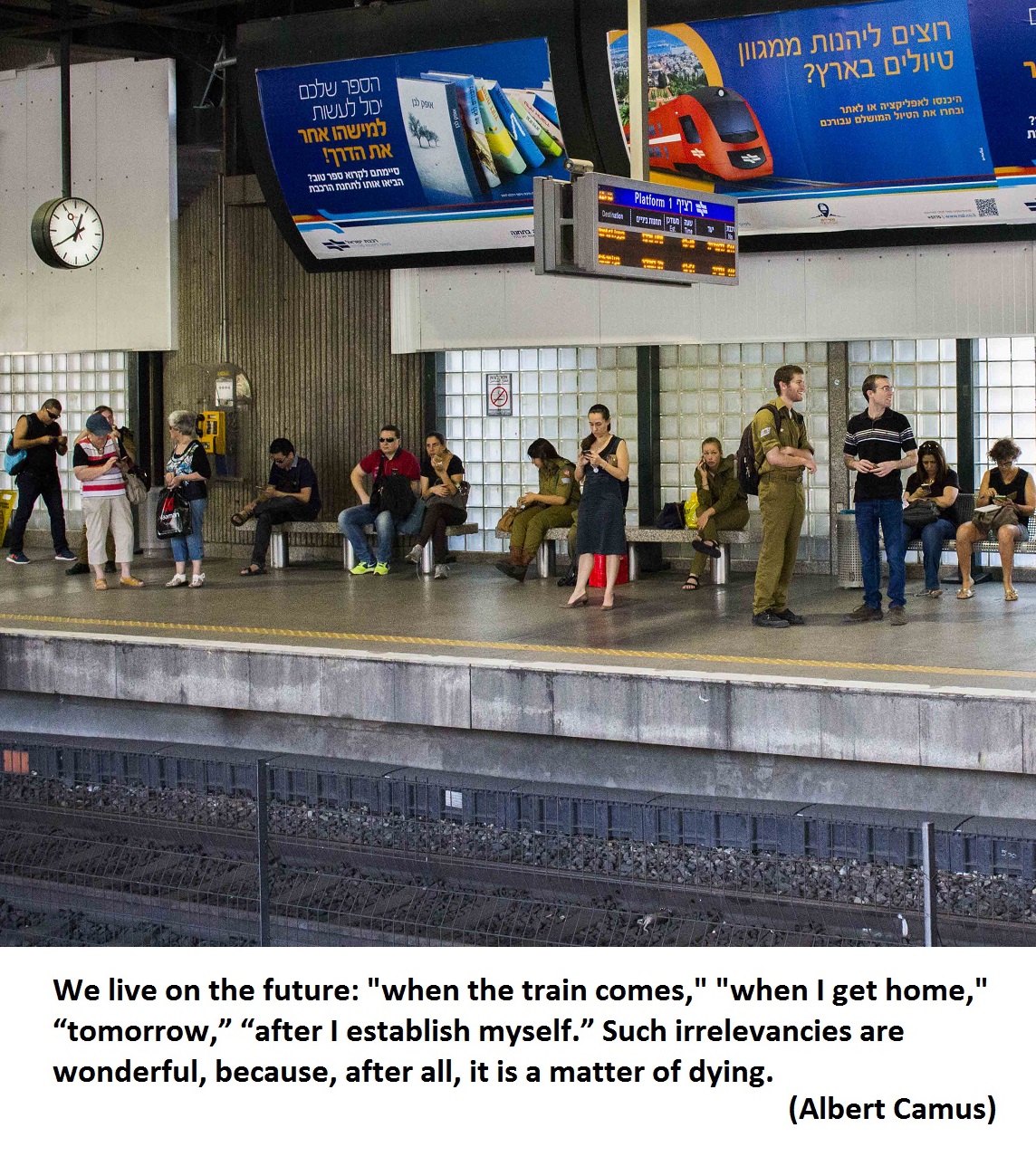 During every day of a monotonous life, time carries us. But a moment always comes when we have to carry it. We live on the future: “tomorrow,” “later on,” “after you establish yourself,” “you will understand when you are old enough.” Such irrelevancies are wonderful, because, after all, it is a matter of dying. Yet, a day comes when a person notices or says that he is thirty years old. Thus he asserts his youth. But at the same time, he situates himself in relation to time. He takes his place in it. He admits that he stands at a certain point on a time-curve and acknowledges that he has to travel to its end. He belongs to time, and through the horror that grabs him, he recognizes his worst enemy. Tomorrow – he was longing for tomorrow, whereas everything in him should reject it. This gut-feeling revolt is the absurd. […] During every day of a monotonous life, time carries us. But a moment always comes when we have to carry it. We live on the future: “tomorrow,” “later on,” “after you establish yourself,” “you will understand when you are old enough.” Such irrelevancies are wonderful, because, after all, it is a matter of dying. Yet, a day comes when a person notices or says that he is thirty years old. Thus he asserts his youth. But at the same time, he situates himself in relation to time. He takes his place in it. He admits that he stands at a certain point on a time-curve and acknowledges that he has to travel to its end. He belongs to time, and through the horror that grabs him, he recognizes his worst enemy. Tomorrow – he was longing for tomorrow, whereas everything in him should reject it. This gut-feeling revolt is the absurd. […]
I come at last to death and to the attitude we have toward it. On this point everything has been said, and it is proper to avoid pathos. Yet, you can never be surprised enough that everyone lives as if nobody “knows” [that he is going to die sooner or later]. This is because in reality we do not experience death. Properly speaking, we experience nothing except for what we have lived and made conscious.
[…]
All the pretty speeches about the eternal soul will prove convincingly the opposite: From this motionless dead body, which doesn’t respond if you slap it, the soul has disappeared. This basic and conclusive fact of the adventure of life creates the absurd feeling. Under the fatal light of our destiny, its uselessness becomes evident. No values and no efforts are justifiable in the face of the cruel mathematics that dictates our condition.
From the chapter “PHILOSOPHICAL REASONING”
Living is keeping the absurd alive. Keeping it alive is above all contemplating it. Unlike Eurydice, the absurd dies only when we turn away from it. Revolt is, therefore, one of the only coherent philosophical positions. Revolt is a constant confrontation between a person and his own lack of understanding [of life]. It means insisting on an impossible transparency. It challenges the world every second again. […] This is not aspiration, because it is devoid of hope. This revolt means being sure of a crushing fate, without the resignation that should accompany it. […] The person sees his future, his unique and dreadful future, and he rushes toward it. In contrast, suicide, in its own way, settles the absurd. It covers up the absurd with death. But I know that in order to keep alive, the absurd cannot be settled. It escapes suicide if it is simultaneously awareness of death and rejection of death. It is, like in the last thought of a man condemned to die, that shoe-lace that despite everything he sees a few meters away, the moment before his dizzying fall.
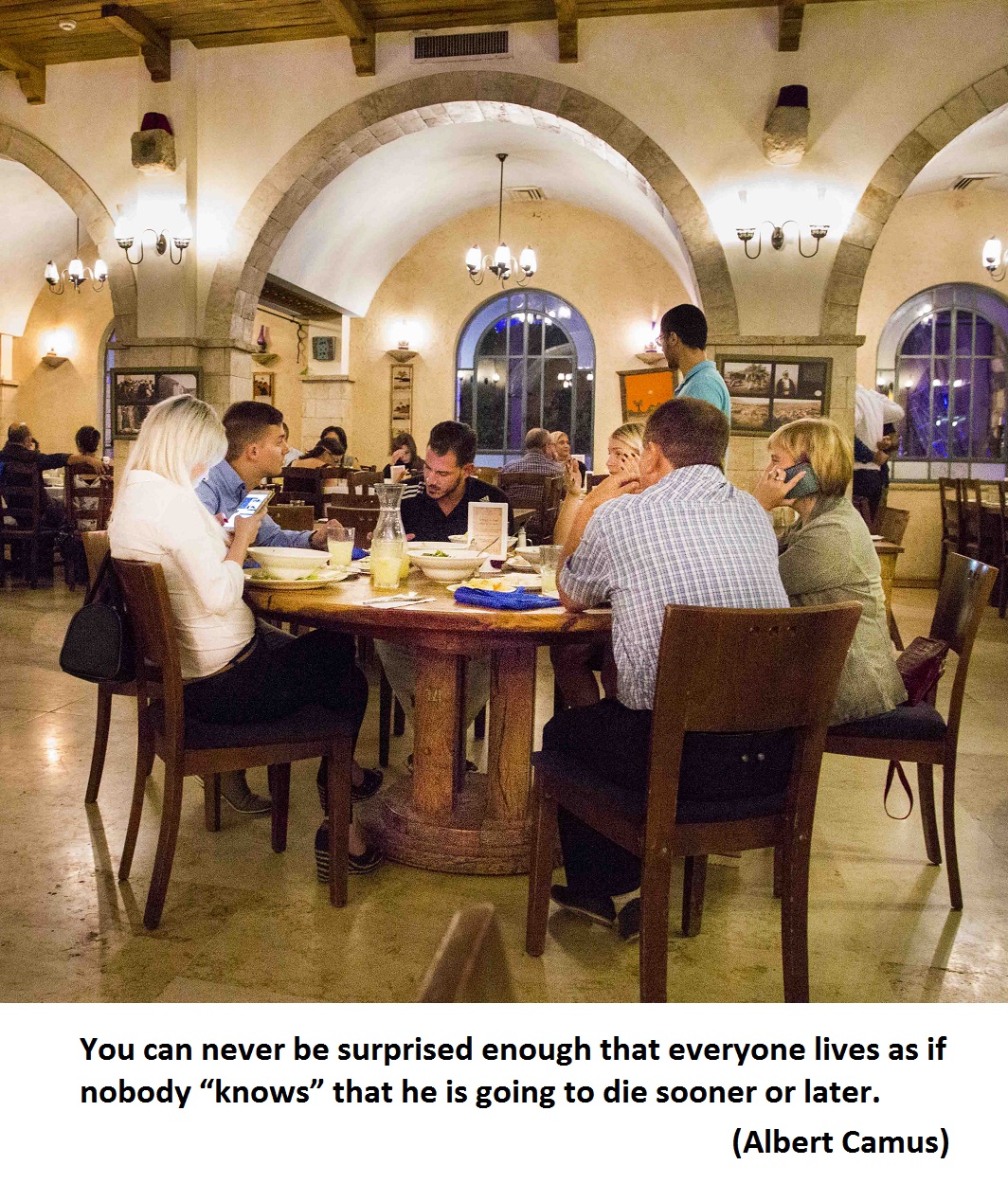 The revolt gives life its value. When it is spread out over the whole life-time, it restores the majesty of life. The revolt gives life its value. When it is spread out over the whole life-time, it restores the majesty of life.
[…]
The absurd is the extreme tension which the person maintains constantly by his own effort. Because he knows that through this awareness, and through this day-to-day revolt, he proves his only truth, which is defiance.
|
bert Camus
Freedom from my own values
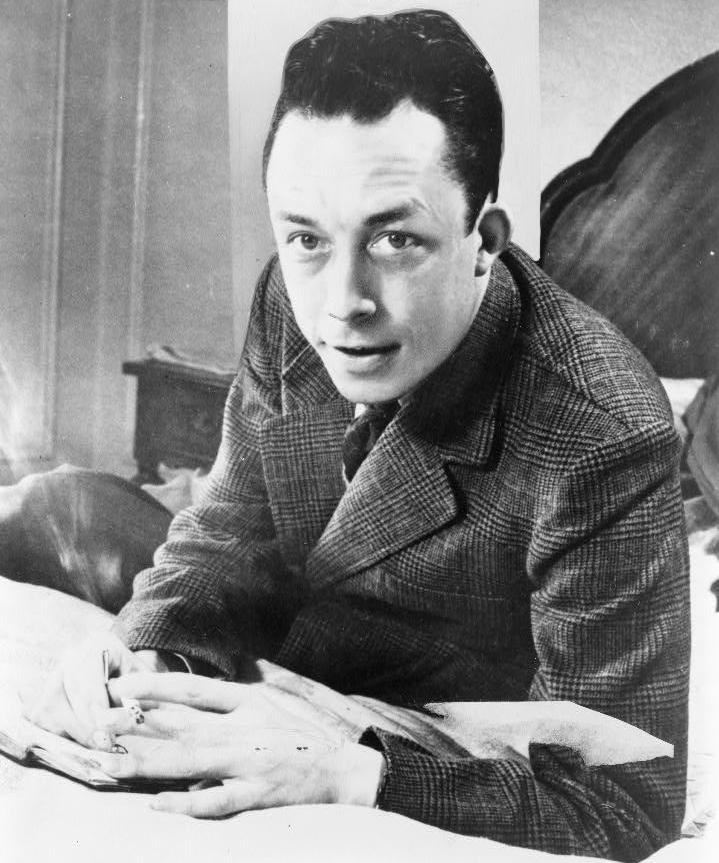
Albert Camus (1913-1960) was a French existentialist philosopher. He wrote several influential books of philosophy and literature, and in 1957 received the Nobel Prize for literature. He died in a car accident at the age of 46.
 The following excerpts are adapted from Camus’ book Myth of Sisyphus. According to the book, the world is “absurd” – it offers us no meaning or reason. Life leads nowhere, and death will end it all. This has serious implications about freedom. Freedom means that I can choose a meaningful purpose and achieve it. But if there are no meaningful purposes, and if death will undo everything I choose, then real freedom is impossible. However, the death of freedom opens a door to a new kind of freedom: The “absurd man” (the person who lives in full awareness of the absurd) is free from purposes and values. He is free to create his life without commitment to any meaning.
At this point of his effort man stands face to face with the irrational. He feels within him his longing for happiness and for reason. The absurd is born of this confrontation between the human longing and the unreasonable silence of the world.
[…]
Before encountering the absurd, the everyday man lives with purposes, with a concern for the future, or with reasons. He weighs his chances, he counts on “some day in the future” – his retirement, or the labor of his sons. He still thinks that something in his life can have a purpose. In fact, he acts as if he was free, even if all the facts contradict this apparent liberty.
But after the absurd, everything is upset. That idea that “I am,” and my way of acting as if everything has a meaning – all this turns out to be false by the absurdity of my upcoming death. Thinking about the future, establishing aims for myself, having preferences – all this assumes a belief in freedom, even if sometimes I say that I don’t feel it. But at that moment, I am well aware that this higher liberty, this freedom to be, which is the only thing that can serve as a basis for truth, does not exist. Death is the only reality. After death, all illusions disappear. I am not even free to perpetuate myself, but I am a slave, a slave without the hope of revolting forever, without the option of contempt… What freedom can exist in the fullest sense without assurance of eternity?
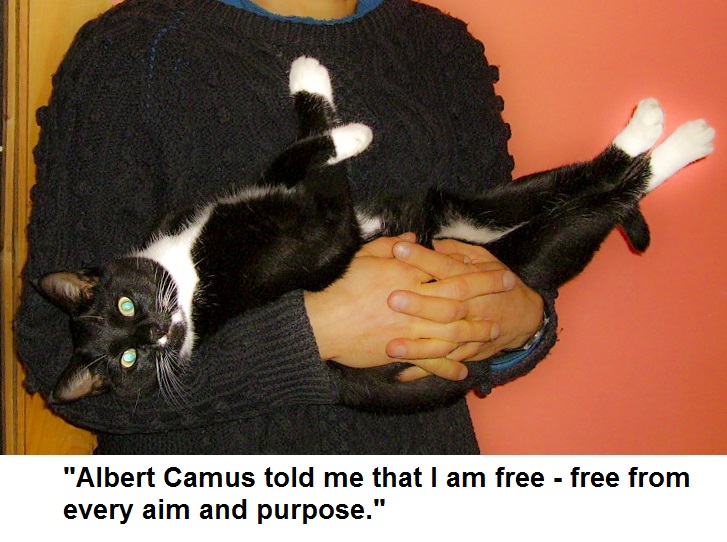 But at the same time, the absurd man realizes that so far he was bound to the assumption of freedom, and that he was living on the basis of this illusion. In a certain sense, this constrained him. To the extent to which he imagined a purpose to his life, he adapted himself to the demands of this purpose. He became a slave of his [illusory] liberty. Thus, I could not act otherwise than as the father (or the engineer, or the leader of a nation, or the post-office sub-clerk) which I intended to be…
Thus, the absurd man realizes that he was not really free. To speak clearly, to the extent to which I hope, to the extent to which I worry about my truth, about a way of being or creating, to the extent to which I arrange my life and assume that it has a meaning, I create barriers for myself, and I limit my life between them… The absurd enlightens me on this point: there is no future. From now on, this is the reason for my own freedom…
[…]
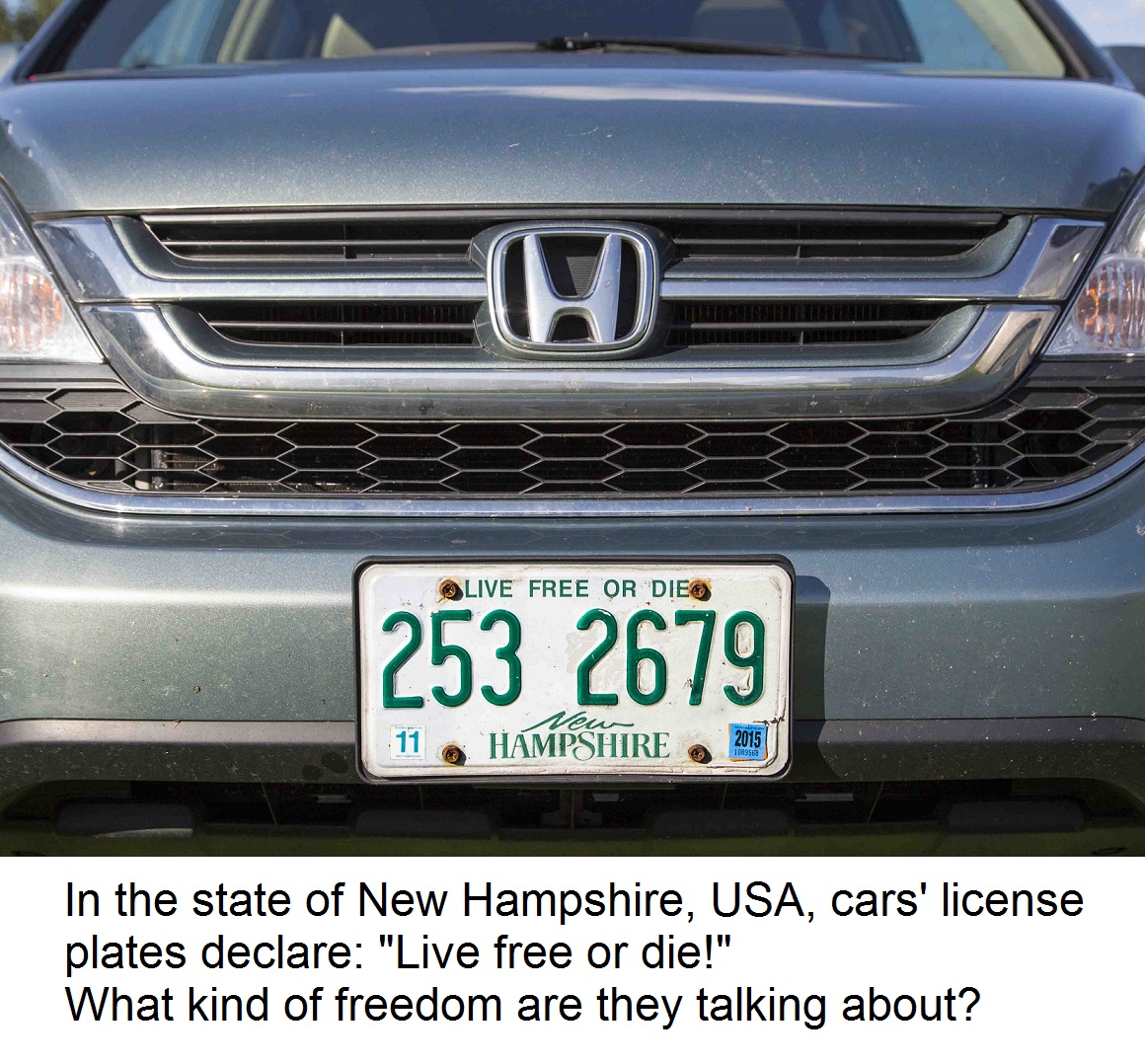 Losing myself in that bottomless certainty [of death, and therefore absurdity], feeling sufficiently remote from my own life so that I can increase it and take a broad view on it – this involves the principle of liberation. This new independence has a definite time-limit, like any freedom of action. It does not write a check on eternity. But it comes instead of the illusions of freedom, which stopped with death… It is clear that death and the absurd are the foundation of the only reasonable freedom: the freedom which a human heart can experience and live.
